
Why Jackknifing Still Haunts Semi Drivers
Jackknifing is one of those words that instantly tightens every trucker’s grip on the wheel. It doesn’t matter how many years we’ve logged behind the wheel or how many miles our I-5 semi towing team has run up and down I-5—when a trailer swings out of control, it turns into a nightmare that’s hard to stop. The risk is always there. Rain. Sleet. Sudden braking. One bad move and we’re staring down a situation that can shut down traffic, total equipment, or worse.
The truth is, jackknifing doesn’t always come from high speed or reckless driving. It can sneak up in the middle of a routine haul when conditions shift or when equipment doesn’t respond the way we expect. That’s why staying alert and prepared is just as important as knowing the weight of your load or the grade of the next hill.
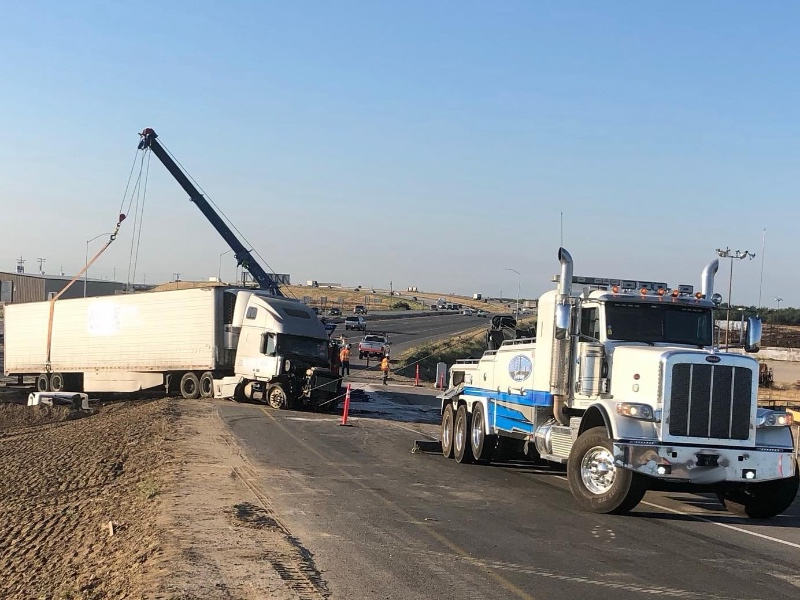
Tips to Keep Your Rig Upright and Out of Our Tow Hooks
Don’t Jam the Brakes Unless You Have To
Hard braking is one of the biggest causes of jackknifes. Especially when your trailer is light or roads are slick. When you slam the brakes, your trailer wants to keep moving forward—and that’s when it starts to swing. Ease into your stops. If traffic is slowing up ahead, give yourself room to coast down.
Stay on Top of Trailer Maintenance
You’d be surprised how many recoveries start with something as simple as uneven brakes or worn tires. If the trailer brakes harder than the tractor, you’re setting yourself up for trouble. Before you roll out, double-check those tires, air pressure, and brake balance. It’s ten minutes that could save you a tow and a headache.
Respect the Road Conditions
The road is unpredictable. Between mountain passes, fog, and sudden showers, it doesn’t take much to lose traction. We’ve seen rigs slide off the shoulder on what looked like a normal stretch of pavement. When the weather shifts, so should your speed. Slow down early and brake lighter than usual. Your trailer will thank you.
Use the Jake With Care
Engine braking is useful, but it can also throw off your traction, especially on icy or wet roads. We recommend dialing it down if there’s any risk of slippage. It’s better to stay in control than to fight a skid halfway down a hill.
Here are a few ways to stay ahead of a jackknife:
- Keep a big buffer in traffic, more space equals more control.
- Gradually decelerate instead of stomping on the brakes.
- Keep your load evenly distributed from front to rear.
- Avoid sudden maneuvers on curves or ramps.
- Don’t ride the clutch or overuse the Jake brake when surfaces are slick.
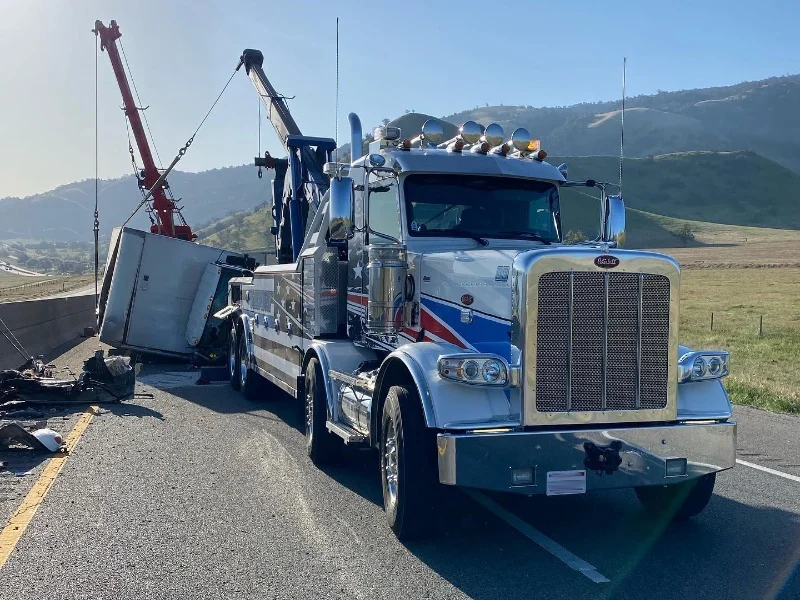
How Golden Empire Towing Handles I-5 Semi Towing After a Jackknife
As a company that specializes in I-5 semi towing, we’re quick to respond to your jackknifed rig. When we arrive, our first goal is to secure the scene and prevent further damage. Then we carefully recover the trailer and tractor, making sure nothing shifts or spills in the process.
These situations are messy, no doubt about it. But they don’t have to be a total disaster. With our heavy-duty equipment and skilled operators, we can upright trailers, pull units out of ditches, and clear wrecks quickly so drivers can get back on the road or to a shop. Our I-5 semi towing team is trained to work fast and smart, even in high-traffic or low-visibility conditions.
If you’re in a bind, day or night, we’re ready. Our I-5 semi towing crew knows how to handle wrecks fast, clean, and without causing more harm. We also offer post-recovery assessments to help drivers understand what happened and how to avoid it in the future. That extra step makes a difference out here.
Our I-5 semi towing knows jackknifing is one of the worst-case scenarios for a driver. But having a dependable I-5 semi towing partner on speed dial can take some of the sting out of a bad day. So next time the road gets slick or traffic gets tight, keep these tips in mind. We’re Golden Empire Towing, and we’re always here when you need us, but we’d much rather meet at a truck stop than on the side of a highway. Stay sharp out there.
FAQ
What is the most common cause of a jackknife accident?
The most common cause is sudden braking, especially when the trailer is lightly loaded or road conditions are slick. This causes the trailer to swing out of alignment with the tractor.
How can I stop a trailer from sliding in bad weather?
Slow down before entering slick areas, use steady pressure on the brakes, and avoid sharp turns or sudden maneuvers. Keeping traction is key.
Is it safer to drive with a full or empty trailer?
A balanced, properly loaded trailer is generally safer. An empty trailer is more likely to lose traction and swing during hard braking or turns.
Can using engine brakes cause a jackknife?
Yes, if used on wet or icy roads, engine brakes can cause the drive wheels to lock up, increasing the chance of losing control.
How fast should I drive in poor road conditions?
Always reduce your speed below the posted limit in poor conditions. Go slow enough to maintain full control, especially when visibility or traction is limited.
What should I do right after a jackknife incident?
Stop the vehicle if it is safe to do so, turn on hazard lights, and contact professional recovery services immediately. Avoid moving the rig further until help arrives.