
Open Roads & Serious Accidents
Most tractor-trailer rollovers we respond to happen within a few miles of an exit or ramp. Those calls usually turn into I-5 semi towing jobs that tie up traffic far longer than anyone expects.
A rollover does not usually come from one bad move. It builds. A driver changes lanes fast, the load is top-heavy, the shoulder drops off, or traffic stacks up near a ramp. Then the trailer starts leaning before the driver has much time to fix it.
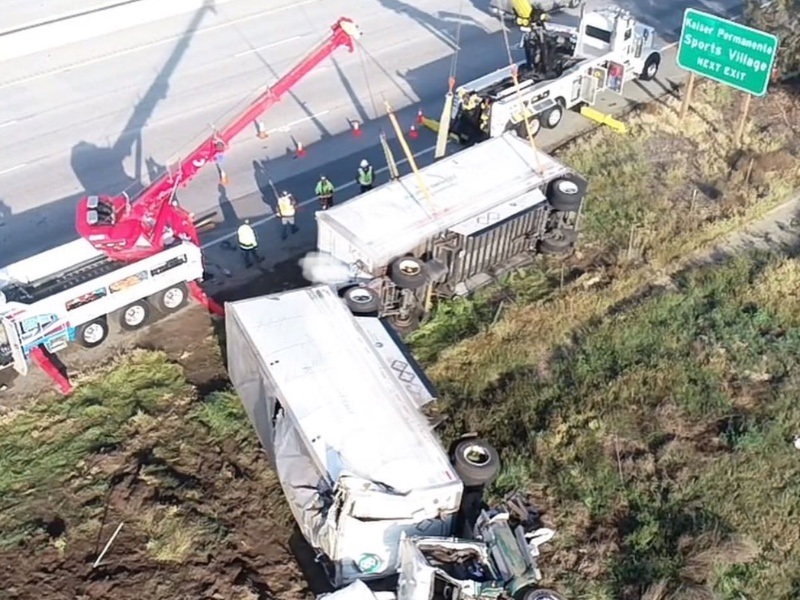
The Tipping Points
Speed Feels Fine Until It Doesn’t
We hear it all the time. The truck felt stable. The road looked clear. Then the curve showed up faster than expected. I-5 has long stretches where drivers settle into a rhythm, and that can make ramps and transitions more dangerous than they look.
A fully loaded trailer carries a lot of momentum. Once it starts to lean, there is not much room to correct. That is where many I-5 semi towing calls begin, especially near exits where traffic patterns change quickly.
Ramps and Curves Catch Drivers Off Guard
Exit ramps near Bakersfield are not always forgiving. Some tighten up more than expected, especially for drivers who are not running this stretch regularly. A slight overcorrection or braking too late can shift the balance fast.
Sudden Traffic Changes Add Pressure
Morning congestion and construction zones force quick decisions. A lane change combined with braking can push a load just enough to start a rollover situation.
Cargo Shift Is a Bigger Problem Than People Think
We have worked plenty of I-5 semi towing recoveries where the trailer looked fine from the outside, but the load inside had moved. It does not take much. A few inches of shift in a tall load can change the center of gravity.
Flatbeds, dry vans, tankers, all of them have their own risks. Produce loads, for example, can shift differently than palletized freight. Liquids move in ways that drivers can feel but not always control.
Load Securement Gets Overlooked
Straps loosen over time. Weight settles during long hauls. If a driver skips a recheck after a stop, small changes can turn into big problems later down the road.
Top-Heavy Loads Increase Risk
Equipment, stacked pallets, or uneven loading raises the center of gravity. That makes the trailer more sensitive to steering and braking inputs.
Wind and Road Conditions Play a Role
Kern County winds are no joke. Absolutely not. We have seen gusts push trailers sideways just enough to start trouble. Combine that with an uneven shoulder or slight drop-off, and things escalate quickly.
Road wear also matters. Grooves, patches, and uneven pavement can affect how tires grip, especially during braking or lane changes. These details come up a lot during I-5 semi towing recoveries.
What Actually Helps Prevent Rollovers
Drivers already know the basics, but the reality on I-5 is that consistency matters more than anything. The drivers who avoid rollovers are usually the ones who stick to steady habits mile after mile.
A few things we see make a difference:
- Slowing down earlier than feels necessary on ramps
- Keeping wider following distances than traffic suggests
- Checking loads during fuel stops
- Watching wind warnings across open stretches
- Avoiding sharp steering corrections
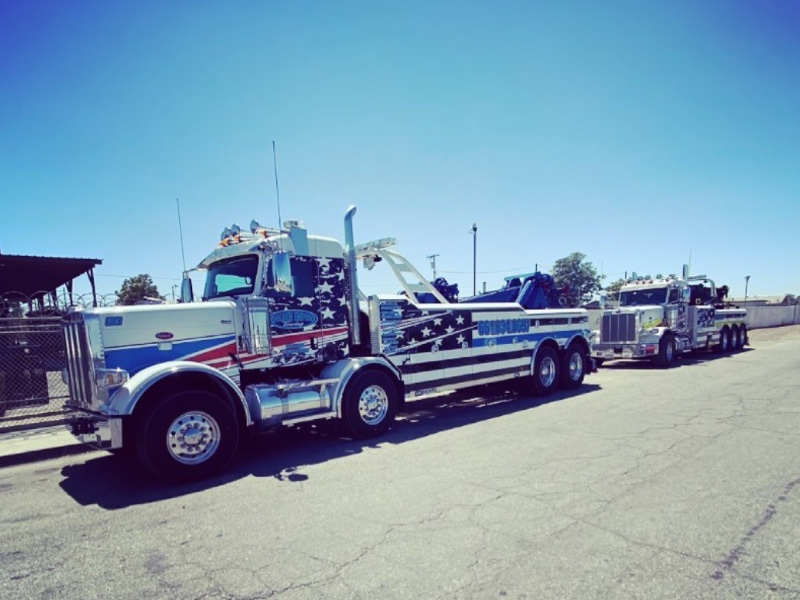
Golden Empire Towing Delivering Real I-5 Semi Towing Work
At Golden Empire Towing, we have been handling calls like this since 1993. What started as a single truck turned into a 45-truck operation after years of steady work, especially after moving into Bakersfield in 2000 and expanding into heavy-duty service in 2005.
Most I-5 semi towing calls we handle are not simple hook-and-go jobs. Rollovers mean lane closures, cargo shifts, coordination with CHP, and long hours on the shoulder. We see the same problem areas again and again along I-5 semi towing routes near Bakersfield. Early mornings, high winds, tight ramps. The patterns do not change much, and neither do the types of calls that come in.