
Working the Night Shift
Once the sun goes down, heavy towing becomes a different kind of job. Visibility drops, traffic patterns shift, and the stakes often feel higher. We’ve done I-5 heavy towing during the day and night, and there’s no question: after-dark calls demand more from our recovery crew, our gear, and our awareness. When a loaded tractor-trailer ends up stuck, overturned, or disabled at night, time and accuracy matter more than ever.
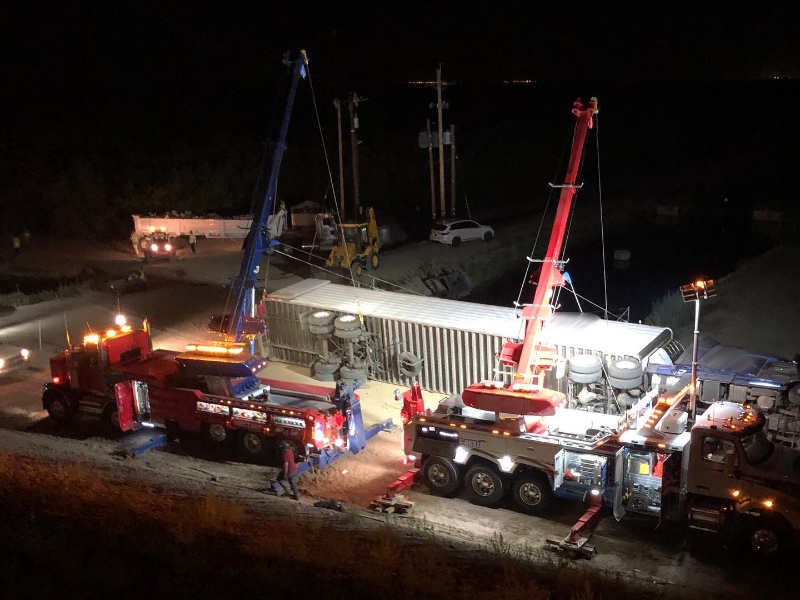
Hazards Multiply in the Dark
Darkness doesn’t just hide the problem; it complicates everything around it.
At night, we deal with:
- Reduced visibility for approaching traffic.
- Limited lighting to assess the recovery scene.
- Increased likelihood of fatigued or impaired drivers passing by.
- Complicated terrain that can’t be easily seen or navigated.
Each of these factors adds risk, especially when we’re dealing with tens of thousands of pounds of steel, rubber, and cargo.
When we get called for an I-5 heavy towing job after dark, our first priority is scene safety. That starts with lighting: deploying scene lights to mark off the perimeter and give our team a clear view of what we’re working with. We block traffic with our wreckers when needed, and we place warning signs and cones well in advance. It’s not just about the recovery; it’s about preventing secondary accidents.
Equipment That Can’t Fall Short
Heavy towing during daylight hours already requires powerful tools. At night, reliability becomes non-negotiable.
Our fleet includes:
- 50-ton and 75-ton wreckers with underlift and rotator capabilities.
- Air cushion recovery systems for overturned loads.
- Winches, snatch blocks, and rigging gear rated for extreme loads.
- Portable LED floodlights and tower lighting to illuminate scenes.
When we respond to a night call, we carry redundant gear to avoid downtime caused by a faulty light or cable. We also inspect every piece of equipment before rolling out. Failures at night are harder to recover from and we don’t get second chances on a busy interstate.
The Crew Makes the Call
Even with the right machines, heavy towing is still human work. Our night crews are seasoned operators who know how to stay focused when most of the world is asleep. We work in shifts to keep our team sharp and rotate responsibilities on long recoveries.
On any I-5 heavy towing job after dark, we have:
- A lead operator managing the recovery plan.
- A spotter watching traffic and communicating position changes.
- Drivers and technicians handling hook-up, rigging, and winching.
Fatigue is real, so we monitor each other and rotate jobs to prevent lapses in attention. We also make sure everyone wears high-visibility gear and headlamps for better awareness in the dark. It’s about staying alert, because a missed step at night carries more risk.
What It Takes to Do the Job Right
When we respond to I-5 heavy towing calls at night, we bring more than trucks and lights. We bring experience, like how to read a scene fast and move with purpose. We bring caution and the understanding that hurrying in the dark creates new dangers. And we bring coordination: communicating constantly with law enforcement, dispatchers, and each other.
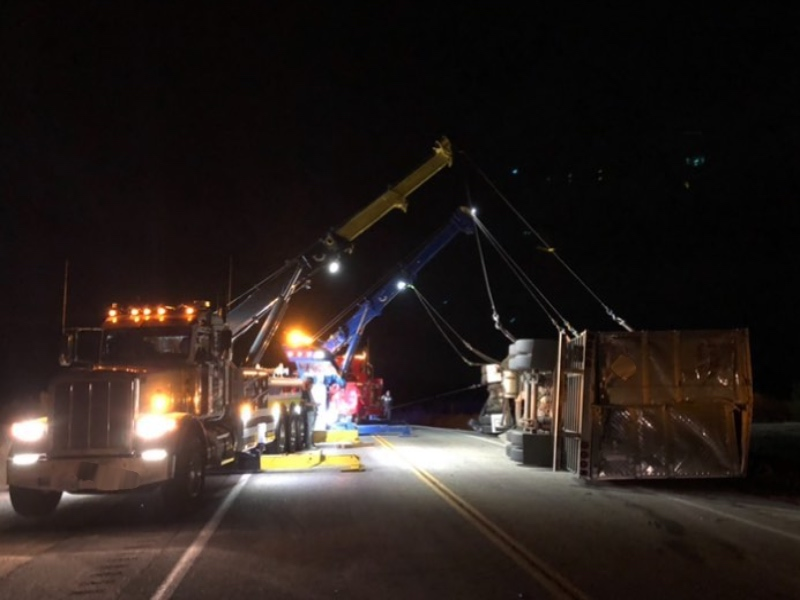
Golden Empire Towing: Night Calls, Heavy Loads, Real I-5 Heavy Towing Solutions
We’ve handled I-5 heavy towing at every hour and in every condition. Night work isn’t something we take lightly. It demands better planning, sharper focus, and gear that performs under pressure.
From flipped reefers to seized axles and broken drive shafts, we’ve cleared them all in the dark. We know that I-5 heavy towing at night demands full control, coordination, and caution every step of the way.
But we’re getting the job done, one rig at a time.