
A Call From a Weigh Station Scale
A call comes into dispatch. A loaded rig has rolled across the scales and come up overweight on one axle. The driver is parked behind the scale house, waiting for help, and the customer on the other end is asking how soon something can move. An I-5 heavy transport plan that started days ago suddenly needs to be rebuilt around a load redistribution. This kind of call happens often enough that experienced carriers treat it as part of the work rather than as a disruption.
Heavy transport planning is not always linear.
The original plan sets the route, the permits, and the equipment, and real conditions sometimes force a rework mid-trip. Carriers who understand that build flexibility into the plan from the start.
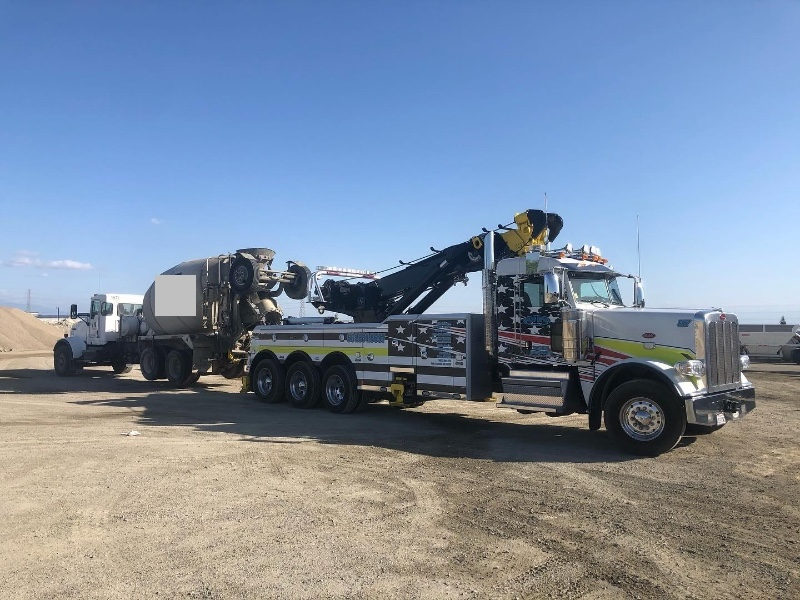
The Original Plan Comes First
Every heavy haul still begins with the basics. Cargo weight, dimensions, axle distribution, route, permits, and equipment all get sorted before the truck rolls. The route through California’s Central Valley adds its own considerations, including weight enforcement at major scales, fuel and rest at the Loves truck stop in Bakersfield, and detour options around the Tehachapi grade.
A planner who knows the corridor builds the route with the next stop and the next weigh station in mind. That foresight is what separates a smooth trip from one that meets surprises every fifty miles.
When the Load Shifts
Heavy cargo can settle, slide, or rotate during the first hours of a trip. Even when loaded perfectly at the origin, a rig may cross the first scales an axle out of compliance. Carriers with weigh-station experience know what each scale operator looks for and how to respond quickly when something reads wrong.
The fix usually involves offloading some cargo, redistributing the load across the trailer, and re-weighing before the truck moves again. A load-shift call typically requires a forklift, hand tools, and sometimes a second trailer to take a portion of the cargo onward separately.
Off-Road and Weigh Station Support
Not every heavy transport call sticks to the interstate. Some require the carrier to head off pavement entirely.
A specialty fleet for this kind of work typically includes:
- 4×4 recovery vehicles for trail and off-road retrievals
- Forklifts for moving palletized cargo at weigh stations
- Rotators for shifting heavy single-piece loads
- Lowbeds for picking up disabled or stuck rigs
- Backhoes for clearing space at roll-over sites
Each piece earns its place when a job calls for it. An I-5 heavy transport carrier that handles the full range of specialty work can resolve problems without bringing in a second contractor, which keeps the plan intact and the customer informed.
The Customer Conversation
A load shift, a scale callout, or an off-road recovery during a planned I-5 heavy transport is also a conversation with the customer. The carrier explains what happened, what the fix costs in time and money, and what the new schedule looks like. Customers who hear honest answers up front trust the carrier with the next call too.
An I-5 heavy transport that runs into trouble at the scales but recovers cleanly usually earns the carrier a repeat customer. The recovery work is part of why customers stay with a single carrier for years.
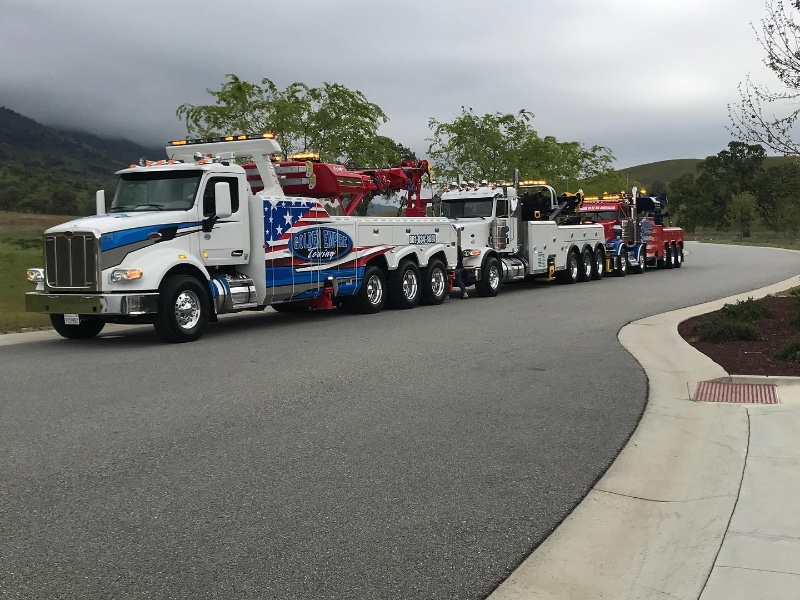
Golden Empire Towing is Your Expert for I-5 Heavy Transport and Specialty Recovery
At Golden Empire Towing, every I-5 heavy transport call we plan benefits from more than three decades of work across the Central Valley. Since 1993, we have grown from one truck to a fleet of 45, with lowbeds, rotators, wreckers, 4×4 vehicles, forklifts, and backhoes ready for any call. We support weigh stations in Lebec and Mohave and assist truck stops like Loves in Bakersfield.
If you have an I-5 heavy transport on the calendar or a load that needs more than a hook and haul, our crew is ready around the clock. From standard pickups to load shifts, roll-offs, and off-road recoveries, we plan the job and bring the right rig for the work.
Frequently Asked Questions
How does a driver know a load has shifted mid-trip?
The first signs are usually feel and instrumentation. The truck may pull harder to one side, ride lower on one corner, or show a different reading on the air ride suspension gauge. Trailer scale readouts at any weigh station also catch shifts quickly. Drivers check straps and weight distribution at every fuel stop to catch any subtle changes early.
What happens if a rig is flagged overweight at a scale?
The driver is required to bring the load into compliance before continuing. Options include offloading some cargo, redistributing weight across the trailer, or splitting the load between two trailers. The scale operator may also issue a fine. Most carriers carry contact information for nearby recovery operators who can help with the offload and re-weigh.
How does a carrier offload cargo at a roadside or scale stop?
For palletized cargo, a forklift transfers material between trailers. For single-piece heavy cargo like a transformer or machine, a rotator or crane handles the lift. The work happens on level pavement when possible, with chocks and outriggers stabilizing both trailers throughout the transfer.
What is a 4×4 recovery and when is it needed?
A 4×4 recovery uses an off-road-capable tow vehicle to retrieve a rig that has left pavement, gotten stuck in soft ground, or rolled onto an embankment. Standard wreckers cannot reach these locations without risking damage. Carriers handling rural or trail work often maintain a dedicated 4×4 fleet for these calls.
Can a load shift damage the cargo or the trailer?
It can. Cargo that slides into trailer walls, stake pockets, or other cargo can sustain scratches, dents, or worse. Shifts also concentrate weight on one axle, which can damage tires, suspension, or the trailer frame over time. Catching a shift early prevents most of this damage.
Does a load shift count as a covered insurance event?
It depends on the policy and the cause. Cargo damage from improper securement at loading is usually covered under cargo insurance. Damage from a load shift caused by road conditions or driver action may fall under different coverage. Customers should review their policy and confirm coverage details before any large or sensitive shipment.